
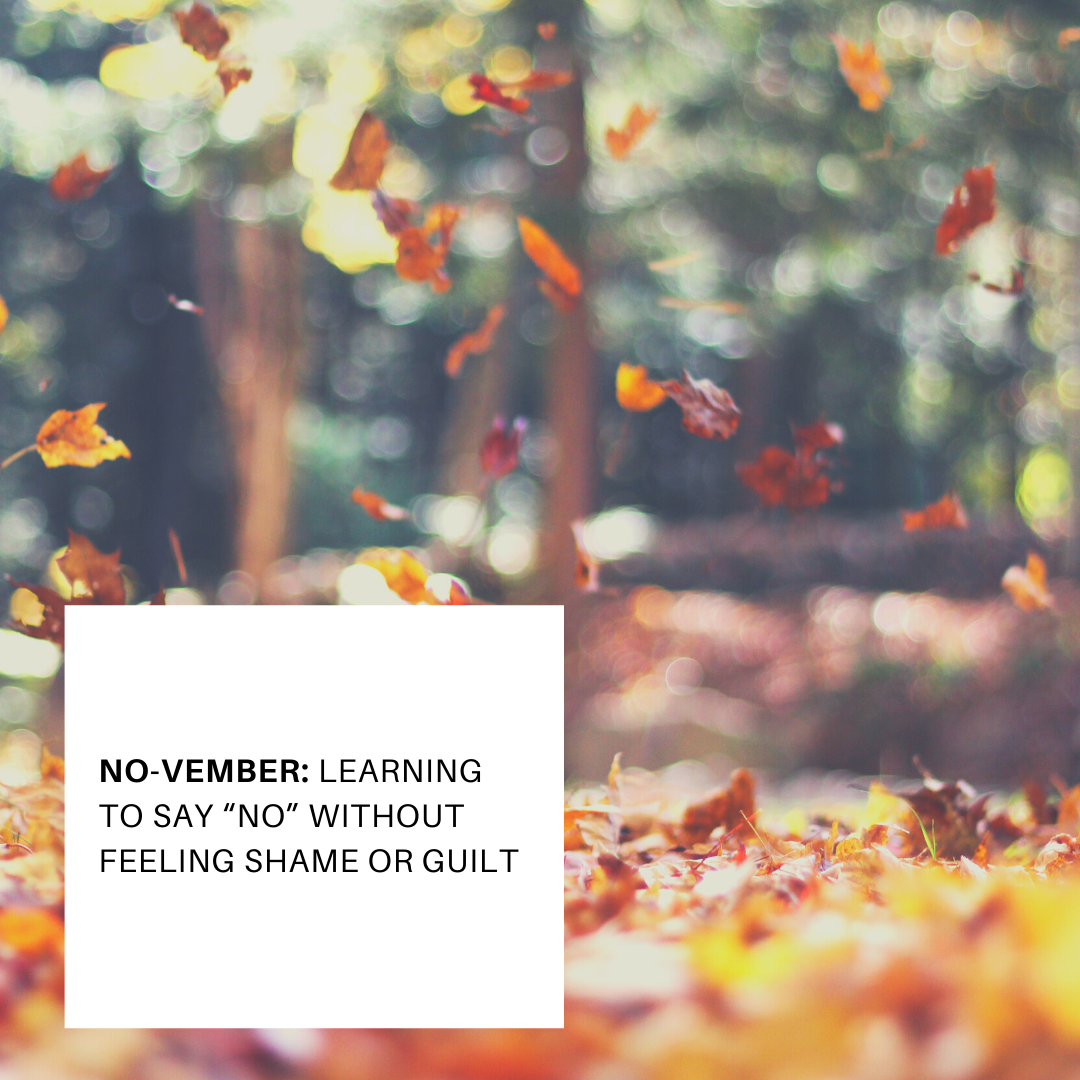
As we enter the month of November, let’s shift our focus on a topic that many of us push aside: self- advocacy. Self-advocacy is the ability to stand up for yourself by expressing your feelings; and most importantly, the ability to ask for what you need and want. I can attest that I have pushed aside self-advocacy, simply by not saying “no” when I felt tired, stressed, and overwhelmed.
One of my weaknesses is having the ability to say “no” without feeling guilty or apologetic. Through experience, I have learned that by not saying “no” and not assessing my wants and needs, led to much despair. Internalizing my wants and needs led to stress, anxiety, insomnia, bad eating habits, etc. I learned that this is not healthy– physically, mentally, or emotionally. Learning to say “no” is difficult, and it can certainly be a work in progress– but it is important to implement this tactic into our daily lives.
Letting go of shame and guilt when saying “no” is challenging, especially when we are used to saying “yes” all the time. Think about this for a minute: imagine saying “yes” to everything that is asked of you in the workplace, at home, with family and friends…then, pause and think of how you feel in this moment. Do you feel overwhelmed? Do you feel stressed? Does this bring up previous conversations and remind you of all the tasks you need to tend to? In result, it is important for us to incorporate “no” when needed. We need to give ourselves time to re-charge and refresh our headspace, and this becomes limiting when we are tasked with many things at once.
Here are some tips to consider when saying “no”
Don’t be apologetic: instead of saying, “I’m sorry, I can’t get to this now,” say “I can’t get to this now. Thank you for your patience and understanding.”
Next, set realistic timeframes that support your mental/emotional health: For example, if you receive a request to complete a task in a short turn-around deadline, feel comfortable to express how you’re feeling. Set a realistic timeframe to support your work– “I can’t guarantee that I will have this completed by X date/time. X date/time is more feasible for me.”
Self-advocacy and learning to say “no” will improve your overall wellbeing– physically, mentally, and emotionally. The feelings of shame and guilt will start to subside as you become more comfortable and confident in your ability to say “no.” This may take time; but once you begin to incorporate this practice into your daily life, then you will start to notice the positive change to your mental and emotional health and wellbeing.
 Lead with Empathy LLC
Leave a comment